Medical Student Cheater: Pediatrics
Showing posts with label Pediatrics. Show all posts

Monday, May 23, 2011

Teen Self-Embedding Behavior: A New Challenge for Primary Care Providers


May 10, 2011 — Self-embedding behavior (SEB) in adolescents is a type of severe self-injury presenting a new primary care challenge, according to the results of a retrospective study reported online May 9 and in the June print issue of Pediatrics.
"[SEB] is an extreme form of self-injury involving the insertion of inanimate objects into the soft-tissues, either under the skin or into muscle," write Gregory H. Bennett, BS, from the Department of Radiology, Nationwide Children's Hospital, and the Ohio State University College of Medicine and Public Health in Columbus, and colleagues.
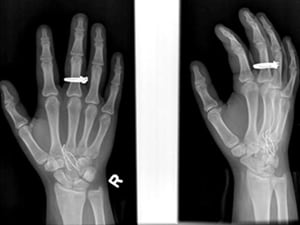
Metal staples are shown on the X-ray of a teenage girl. Courtesy RSNA.
"To date, no case series data on this behavior among adolescents has been described in the pediatric medical literature.... The goal of this study was to define [SEB], develop a clinical profile of adolescents who engage in SEB, and emphasize the importance of rapid, targeted, and effective identification and intervention."
Using a database assessing 600 patients who were percutaneously treated for soft-tissue foreign body removal, the investigators identified adolescents with foreign bodies self-embedded in the soft tissue and described their demographics, psychiatric diagnoses, and characteristics of SEB.

Wednesday, April 27, 2011

Tonsillectomy in Children


Medscape: One of the most relevant recommendations in the guideline for primary care providers is the first statement, which recommends watchful waiting for recurrent throat infections if there have been fewer than 7 episodes in the previous 12 months or fewer than 5 episodes per year in the previous 2 years or fewer than 3 episodes per year in the past 3 years. So bottom line, children should be observed for at least 1 year before a referral to a surgeon to consider tonsillectomy. Is this number of episodes irrespective of the severity of the episodes? Is the intent that these episodes will have all been of sufficient intensity to warrant a visit to a healthcare provider?
Dr. Wald: To put this in perspective, and this is stated clearly in the document, the purpose of the guideline is to avoid unnecessary intervention in children who have recurrent throat infection who are very likely to have a favorable natural history and improve on their own and therefore will be benefited by avoiding surgery. There may be exceptions occasionally on the basis of either very severe or very complicated infections. But in general, I think this is a good outline and the idea is that, yes, these episodes would have been seen by a clinician and the infection would be adequately documented. A lot of this work dates back to a study that was done by Jack Paradise in the late 1970s.[2] His research used very stringent criteria that described what were termed "counting episodes." A child was considered to have had a counting episode that contributed to the number of episodes if they had, in addition to their sore throat, at least 1 of the following 4 criteria:
  • A fever > 38.3° Celsius;
  • Cervical adenopathy, which was defined as a lymph node in the neck that measured > 1 cm and was tender;
  • Tonsillar exudates; or
  • A positive test for group A streptococci.

Wednesday, April 6, 2011

Juvenile Rheumatoid Arthritis

Juvenile rheumatoid arthritis (JRA) is the most common rheumatological disease in children and is one of the most common chronic diseases of childhood. It represents a group of disorders that all share the clinical manifestation of chronic joint inflammation. The etiology is largely unknown, and the genetic component is complex, making clear distinctions between the various subtypes difficult. As a result, various classification criteria are recognized, with different benefits and limitations. A new nomenclature, juvenile idiopathic arthritis (JIA), is increasingly used and is replacing the term juvenile rheumatoid arthritis.
The American College of Rheumatology classifies juvenile rheumatoid arthritis into 3 distinct subtypes: pauciarticular juvenile rheumatoid arthritis, polyarticular juvenile rheumatoid arthritis, and systemic JRA. Other childhood arthritis such as juvenile ankylosing spondylitis and psoriatic arthritis are classified under spondyloarthropathies.
In 1997, the International League of Associations for Rheumatology (ILAR) conducted a consensus conference during which they proposed the nomenclature juvenile idiopathic arthritis. The classification criteria include psoriatic arthritis and enthesitis-related arthritis, which encompasses juvenile ankylosing spondylitis, arthritis associated with inflammatory bowel disease,reactive arthritis, and spondyloarthropathies. This has resulted in some confusion in the literature; when reviewing existing literature, consider whether authors are referring to the juvenile rheumatoid arthritis or juvenile idiopathic arthritis nomenclature because this affects the population being discussed and thus the generalizability of the results.
This article focuses on oligoarticular juvenile idiopathic arthritis (pauciarticular juvenile rheumatoid arthritis), polyarticular juvenile idiopathic arthritis, both rheumatoid factor positive and negative (polyarticular JRA), and systemic juvenile idiopathic arthritis (systemic JRA).

Thursday, March 24, 2011

Pediatric Febrile Seizures

Febrile seizures are the most common type of seizures observed in the pediatric age group.
Although described by the ancient Greeks, it was not until this century that febrile seizures were recognized as a distinct syndrome separate from epilepsy. In 1980, a consensus conference held by the National Institutes of Health described a febrile seizure as, "An event in infancy or childhood usually occurring between three months and five years of age, associated with fever, but without evidence of intracranial infection or defined cause." It does not exclude children with prior neurological impairment and neither provides specific temperature criteria nor defines a "seizure." Another definition from the International League Against Epilepsy (ILAE) is "a seizure occurring in childhood after 1 month of age associated with a febrile illness not caused by an infection of the central nervous system (CNS), without previous neonatal seizures or a previous unprovoked seizure, and not meeting the criteria for other acute symptomatic seizures".

Friday, March 18, 2011

Neonatal Sepsis


Neonatal sepsis may be categorized as early or late onset. Eighty-five percent of newborns with early-onset infection present within 24 hours, 5% present at 24-48 hours, and a smaller percentage of patients present within 48-72 hours. Onset is most rapid in premature neonates. Early onset sepsis syndrome is associated with acquisition of microorganisms from the mother. Transplacental infection or an ascending infection from the cervix may be caused by organisms that colonize in the mother's genitourinary tract, with acquisition of the microbe by passage through a colonized birth canal at delivery. The microorganisms most commonly associated with early-onset infection include group B Streptococcus (GBS), Escherichia coli , coagulase-negative  Staphylococcus,  Haemophilus  influenzae , and Listeria  monocytogenes.

Trends in the epidemiology of early onset sepsis show a decreasing incidence of GBS sepsis.[2 ]This article primarily focuses on bacterial infection and sepsis. Please see relevant eMedicine chapters for discussion of congenital infection, fungal infection, and viral infection of the newborn.
Late-onset sepsis syndrome occurs at 4-90 days of life and is acquired from the caregiving environment. Organisms that have been implicated in causing late-onset sepsis syndrome include coagulase-negative staphylococci, Staphylococcus aureus , E coli, Klebsiella, Pseudomonas, Enterobacter, Candida,  GBS,  Serratia, Acinetobacter, and anaerobes. Trends in late-onset sepsis show an increase in coagulase-negativeStreptococcal sepsis; most of these isolates are susceptible to first-generation cephalosporins.[2 ]The infant's skin, respiratory tract, conjunctivae, GI tract, and umbilicus may become colonized from the environment, leading to the possibility of late-onset sepsis from invasive microorganisms. Vectors for such colonization may include vascular or urinary catheters, other indwelling lines, or contact from caregivers with bacterial colonization.
Pneumonia is more common in early onset sepsis, whereas meningitis and bacteremia are more common in late-onset sepsis. Premature and ill infants have an increased susceptibility to sepsis and subtle nonspecific initial presentations; therefore, they require much vigilance so that sepsis can be effectively identified and treated.

Neonatal Jaundice


Jaundice is the most common condition that requires medical attention in newborns. The yellow coloration of the skin and sclera in newborns with jaundice is the result of accumulation of unconjugated bilirubin. In most infants, unconjugated hyperbilirubinemia reflects a normal transitional phenomenon. However, in some infants, serum bilirubin levels may excessively rise, which can be cause for concern because unconjugated bilirubin is neurotoxic and can cause death in newborns and lifelong neurologic sequelae in infants who survive (kernicterus). For these reasons, the presence of neonatal jaundice frequently results in diagnostic evaluation.
Neonatal jaundice may have first been described in a Chinese textbook 1000 years ago. Medical theses, essays, and textbooks from the 18th and 19th centuries contain discussions about the causes and treatment of neonatal jaundice. Several of these texts also describe a lethal course in infants who probably had Rh isoimmunization. In 1875, Orth first described yellow staining of the brain, in a pattern later referred to as kernicterus.

Saturday, January 15, 2011

Diarrhea

Acute diarrhea is defined as the abrupt onset of abnormally high fluid content in the stool: more than the normal value of approximately 10 mL/kg/d in the infant and young child, and more than 200 g/d in the teenager and adult. This situation typically implies an increased frequency of bowel movements, which can range from 4-5 to more than 20 times per day. The augmented water content in the stools is due to an imbalance in the physiology of the small and large intestinal processes involved in the absorption of ions, organic substrates, and thus water. A common disorder in its acute form, diarrhea has many causes and may be mild to severe.

Childhood acute diarrhea is usually caused by infection; however, numerous disorders may cause this condition, including a malabsorption syndrome and various enteropathies. Acute-onset diarrhea is usually self-limited; however, an acute infection can have a protracted course. By far, the most common complication of acute diarrhea is dehydration.
Although the term "acute gastroenteritis" is commonly used synonymously with "acute diarrhea," the former term is a misnomer. The term gastroenteritis implies inflammation of both the stomach and the small intestine, whereas, in reality, gastric involvement is rarely if ever seen in acute diarrhea (including diarrhea with an infectious origin); enteritis is also not consistently present. Examples of infectious acute diarrhea syndromes that do not cause enteritis include Vibrio cholerae– induced diarrhea and Shigella -induced diarrhea. Thus, the term acute diarrhea is preferable to acute gastroenteritis.
Diarrheal episodes are classically distinguished into acute and chronic (or persistent) based on their duration. Acute diarrhea is thus defined as an episode that has an acute onset and lasts no longer than 14 days; chronic or persistent diarrhea is defined as an episode that lasts longer than 14 days. The distinction, supported by the World Health Organization (WHO), has implications not only for classification and epidemiological studies but also from a practical standpoint because protracted diarrhea often has a different set of causes, poses different problems of management, and has a different prognosis.

Wednesday, December 1, 2010

Benign Childhood Epilepsy

Epilepsy is defined as 2 or more unprovoked seizures. The various types of epilepsy differ in many aspects, including (1) age of onset, (2) semiology, (3) EEG findings, and (4) outcome. In 1987, Freeman et al reported that most children with generalized tonic-clonic seizures have a benign developmental disorder that reduces their seizure threshold and will be outgrown. This disorder has been termed benign childhood epilepsy and is thought to be secondary to CNS immaturity.
In this article the term benign epilepsy is used to refer to a group of pediatric epileptic disorders in which remission and lack of significant neurologic sequelae are expected in the vast majority of patients. These disorders are idiopathic, occur in otherwise healthy children, and have (with rare exceptions) a strong genetic component. They include both generalized epilepsies and partial epilepsies. These epilepsies are presented according to the age of onset, starting from the neonatal period.
Related Posts Plugin for WordPress, Blogger...